
Increase in cross trade: Cryptographic opportunities and challenges
As the cryptocurrency world continues to develop, a new phenomenon has emerged: trade in cross -border circuit. This innovative approach allows users to market cryptocurrency in different blockchain, allowing one -piece interaction between different networks. In this article, we will go into the concept of cross -border trade, explore its benefits, and explore the opportunities and challenges ahead.
What is the trade of mutual chain?
Cross -border chain trade refers to the transfer of assets or tokens from one blockchain to another without a direct link to the underlying network. This approach bypasses the traditional boundaries imposed by centralized exchange (CEXS) and decentralized finance (DEFI) platforms, allowing a more flexible and efficient asset exchange.
BEP20: Between Chain Trade Standard
The BEP20 is a standardized protocol developed by Binance Smart Chain (BSC), which allows the establishment of standardized contracts on multiple blockchain networks. This makes it easier to develop, deploy and manage between chain assets, facilitating seamless interaction between different chains.
BEP20 markers offer several benefits:
* Token Standardization : Standardization of BEP20 markers provides compatibility on various blockchain networks.
* scalability : BEP20 allows you to create a marker of standardized contracts on multiple networks, increasing scalability and reducing congestion.
* Compatibility : The protocol allows you to interact with the interaction of the circuit, allowing users to move the assets between the chains without restrictions.
Cross-chain Arbitrage
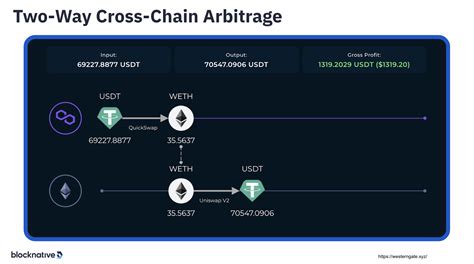
Arbitrage is an important aspect of cryptocurrency markets, where prices are inconsistent with trade costs or liquidity differences. Between the chain arbitration uses these price differences, allowing traders to use the best prices in one blockchain and exchange them to another chain.
Among the chain trading context, arbitration refers to active buying practices in a less liquid (or more expensive) circuit and sell them on a liquid (or cheaper) chain. By doing this, users can benefit from the price differences between the chains without making additional fees or transaction costs.
Conthain Trade Benefits
Among the chain trade offers several benefits:
Increased availability
: Conthain Trading makes it easier to access assets and markets that are currently not available on traditional stock exchanges.
* Improved scalability : By attracting BEP20 markers, trade in various chains allows faster and more efficient asset exchange on various blockchain networks.
Improved Security : Conthain Trade Protocols often use stable security measures, such as standardization of markers and decentralized management to protect users’ assets.
Challenges and Restrictions
While chain trade offers many benefits, there are also a number of challenges and limitations that need to be considered:
* Regulatory Uncertainty : Between Chain Trade Landscape is still evolving, making a significant understanding of the applicable laws and regulations in your jurisdiction.
* Collaboration issues : Although the BEP20 markers have improved compatibility, there may be cases where active or contracts are not compatible in different chains.
* Challenges of Scalability
: Between the chain trade can be resources that require significant computing power and infrastructure investment.
Conclusion
Among the chain trade is a revolutionary approach to cryptocurrency markets, offering increased access, scalability and security. By attracting BEP20 tokens and between the chain protocols, traders can use the price differences between blockchain networks, expanding their reach and profitability.