
Ethereum: Why Is Difficulty Rising?
The cryptocurrency world has been abuzz with news of the rising mining difficulty in recent months. Many investors, developers, and enthusiasts have been wondering what’s behind this trend and whether it poses a challenge to the very existence of Ethereum, one of the most popular and widely used blockchain platforms. In this article, we’ll delve into why mining difficulty is rising and examine its implications for the Ethereum ecosystem.
What is the definition of difficulty?
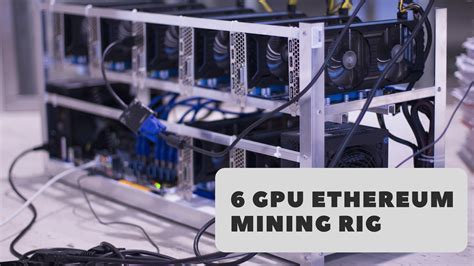
Mining difficulty refers to the number of “hash attempts” required to solve complex mathematical puzzles in order to validate transactions on the blockchain. These puzzles are solved by powerful computers that compete against each other using specialized hardware such as graphics cards and CPUs. Solving a puzzle determines whether a new block has been successfully added to the blockchain.
Why is increasing difficulty?
The increasing mining difficulty can be attributed to several factors:
- Scalability: As more users join the Ethereum network, the number of transactions per second increases, which burdens the system. To cope with this increase, miners must increase their hashing power, which requires more powerful hardware.
- Network congestion: The growing number of active wallets and transactions has led to increased network congestion, causing slower transaction processing and higher fees for users.
- New block reward distribution
: The Ethereum network’s block reward has been halved from 50 ETH in July 2016 to 12.5 ETH in May 2020. This change was made to encourage more active mining and staking activities on the platform.
- Increased Energy Consumption: The increasing demand for computing power has led to a significant increase in energy consumption, which could have a negative impact on the environment.
Impacts of Increasing Mining Difficulty
The increasing mining difficulty will likely have several consequences:
- Higher Transaction Fees: As more miners compete for blocks, transaction fees could increase as the network becomes more congested.
- Reduced Block Reward
: As more miners join the network, it is possible that the 12.5 ETH block reward could decrease or become less attractive to miners.
- Increased Energy Consumption: The increasing demand for computing power will lead to increased energy consumption and potentially higher carbon emissions.
Effects on Ethereum
Increasing mining difficulty could impact the Ethereum ecosystem in several ways:
- Slow transaction processing times: Increased congestion and slower network speeds could lead to delays in transactions, which would impact the user experience.
- Reduced block reward incentives: Reducing block rewards could make participating in the network less attractive to miners, potentially reducing their incentive to upgrade their hardware or invest in more efficient mining hardware.
- Increased competition: Higher transaction fees and reduced block rewards could lead to increased competition among miners, increasing costs and potentially forcing some to leave the market.
Conclusion
Increasing mining difficulty is a natural consequence of Ethereum’s growth and scalability efforts. While this presents challenges for both users and miners, it is important to consider the potential benefits of increased network congestion, such as faster transaction processing times and higher block rewards. As the Ethereum ecosystem evolves, miners will need to adapt their strategies to adapt to the changing mining landscape.